

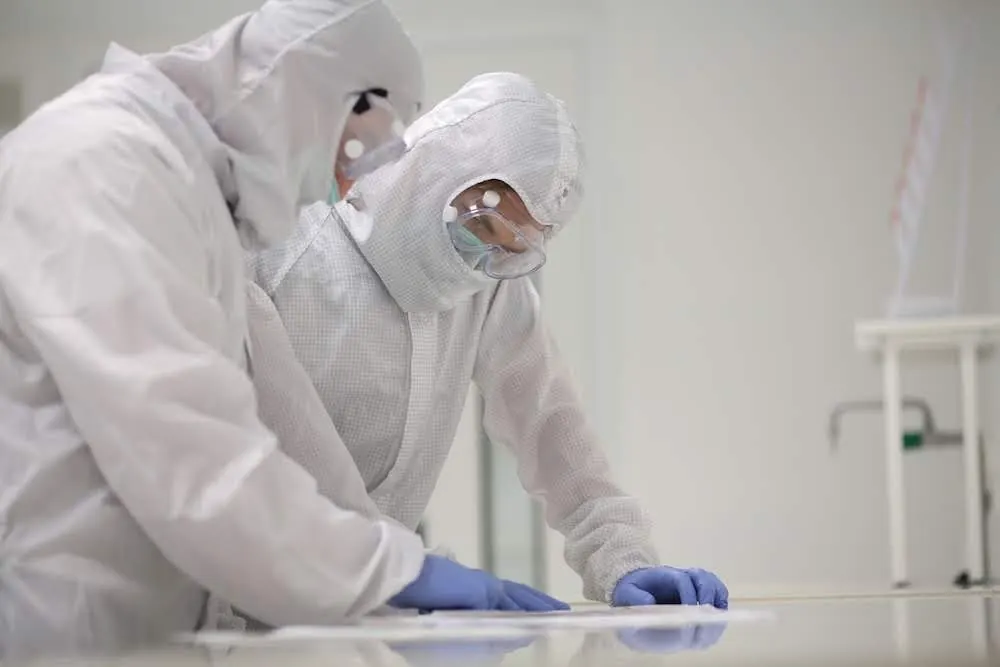
There are many definitions of the word cleanroom, but to simplify, we can say that it is a complex organisational unit consisting of a room or a group of rooms with a controlled environment, together with equipment and people, set up to carry out a research, analytical or production process.
It is the effectiveness, efficiency and safety of the process that require laboratories with controlled environmental conditions, such as microbiological cleanliness, permissible particle count, humidity and electrostatic control. Most such facilities are designed as cleanroom-type clean zones (which means compliance with at least ISO 14644). They are among the most advanced types of laboratories and are difficult to design and build.
We must not forget that the life of a laboratory begins once construction is complete. Procedures, training, the quality of equipment, regular servicing of all installations, constant supervision, adjustment of installation settings and the ability to use monitoring systems are therefore just as important as design and construction. The quality of the cleaning service matters too.
Design
Creating a laboratory should of course start with a concept needed to prepare the design (in practice several designs: process, architecture, ventilation, technical gases, etc.). Close cooperation between the contractor and the client is essential. Cleanroom designs differ significantly from typical building designs, or even laboratory designs, and require specialist knowledge and an experienced team. The formal side of the project – dealing with authorities and inspections – is also important. Maintaining a poorly designed cleanroom will quickly cost more than building a clean zone with well-thought-out solutions.
Construction
Likewise, running a clean construction site is a responsible and complex task, very different from typical construction projects – here, too, specialisation, experience and access to building materials intended exclusively for clean construction are essential. The construction should be run as a clean build from the very beginning, and the team should not consist of subcontractors who do not know each other. It is best to work with companies that have a trained, well-coordinated team of people who design and build cleanrooms.
Operating the clean zone
Proper operation of a clean zone requires constant care for its cleanliness and supervision of environmental parameters. Depending on the class of the zone, it must be equipped accordingly. The minimum includes trolleys, mops, wipes, chemicals, garments, mats, calibrated meters, etc. Even furniture and office equipment must be validated for cleanroom use and used appropriately.